

Overall brief:
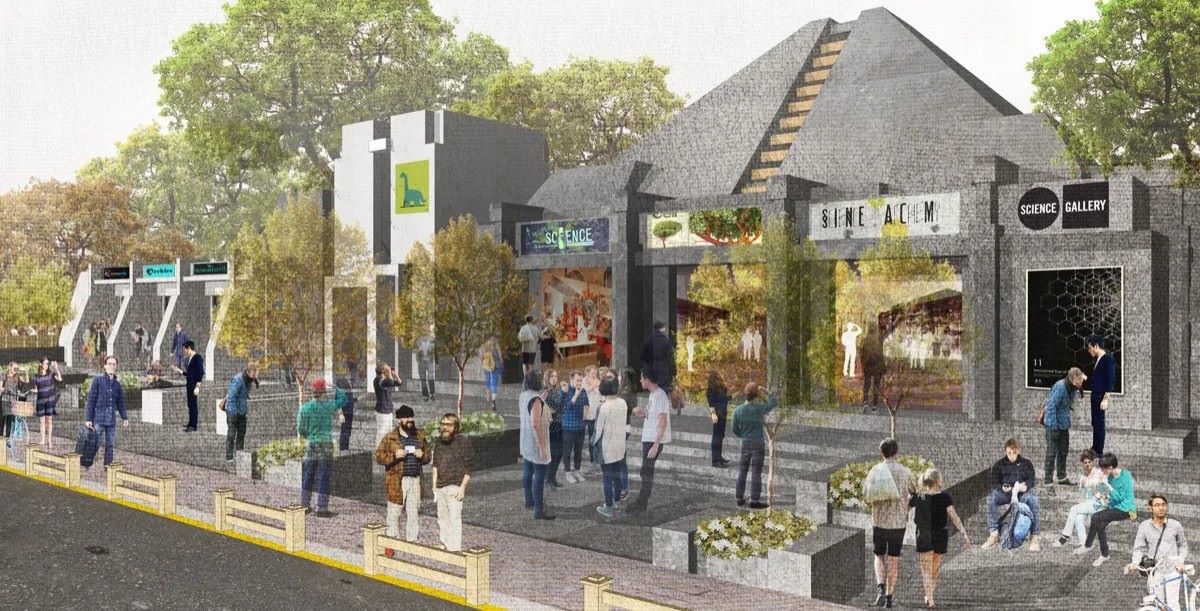
The Science Gallery is an initiative taken to create a platform that plays a major role in igniting creativity and discovery at the conjunction of science and art. Through a dynamic, ever-changing roster of exhibitions, educational workshops, training programs, and public events, the science gallery will be a teleport for visitors into a stimulating and captivating environment that supplements the desire to grow and learn more and generates a gateway to a scientific temperament.
Context Responsive:
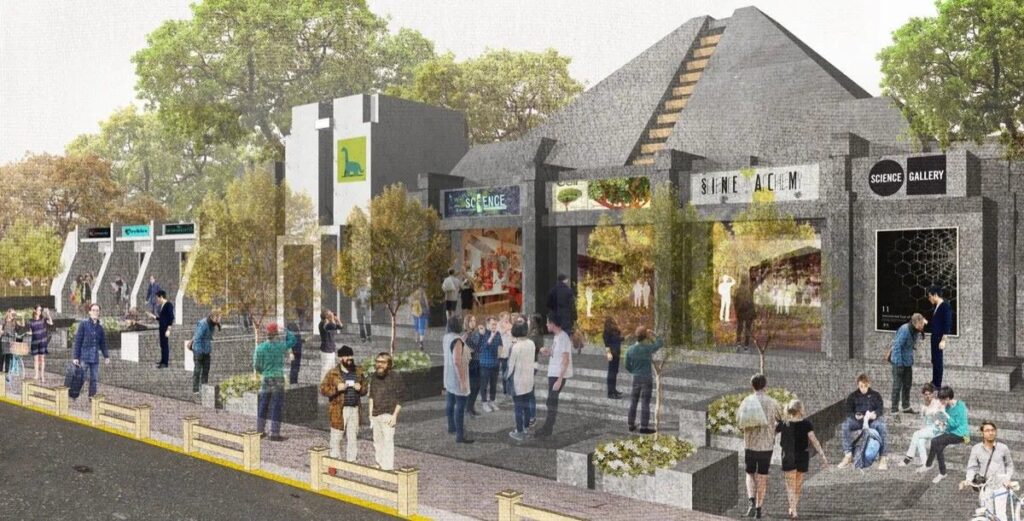
Bangalore is a place for scientific and creative innovation, which provides an outreach platform for sharing ideas, projects, and approaches, enabling young adults to become future innovators. The new campus of Science Gallery Bangalore is envisaged to be a unique addition to this ecosystem.
A building complex that could complement the transforming nature of Bangalore thus formed the basis of this design proposition. The concept of breaking up the built and integrating it with open spaces, rather than placing a single building block, opened up a whole new opportunity to experience and engage with scientific technologies and innovations at a primary level. Provision of diverse types of spaces in workshops, exhibitions, formal and informal spaces has been explored to maximize the interest of young minds.
Design Philosophy:
Connect – Engage – Explore is a concept on the basis of which this Gallery has been designed to envisage the dynamic and innovative character of Bangalore. This concept has been implemented to develop a binding connection between the city and its scientific temperament. This has been done by creating a transparency between the innovations in science and art and the people through the medium of design of the built environment.
A visually transparent connection between the city and the public building is crucial in order to make people aware of such a holistic building complex and to encourage the inflow of visitors not only regarding scientific innovations but also as a congregation place. Sensitively planned built environment allows individuals to constantly engage in various activities taking place in the complex and enhance their train of thought. Exploring different typologies of spaces etches a distinct memory in an individual’s experience in understanding science and technology.
Establishing a connection:
The complex has tried to visually open up at an urban and a building level to create connections between the city and the building complex, as well as the people and the built environment. Accessibility and permeability of the building play a primary role in facilitating this connection.
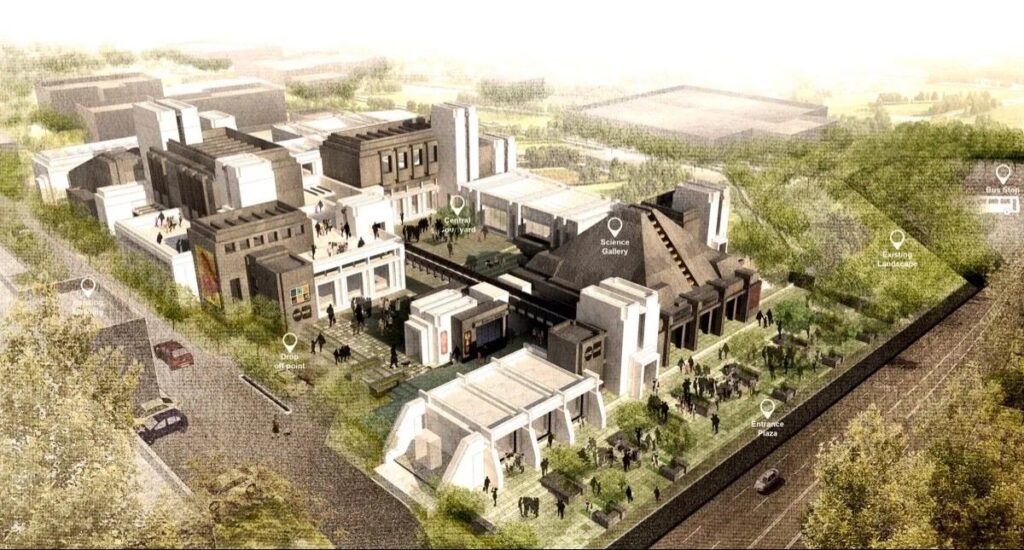
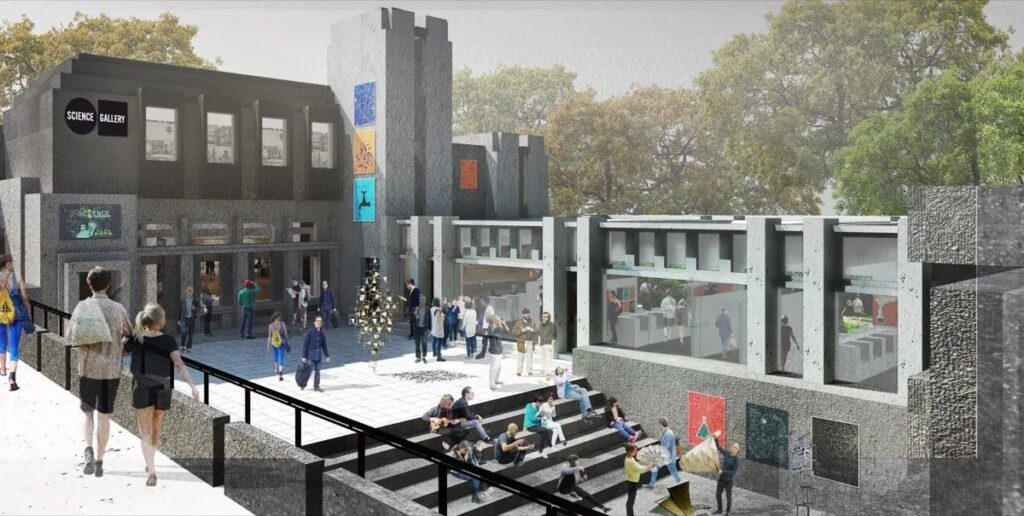
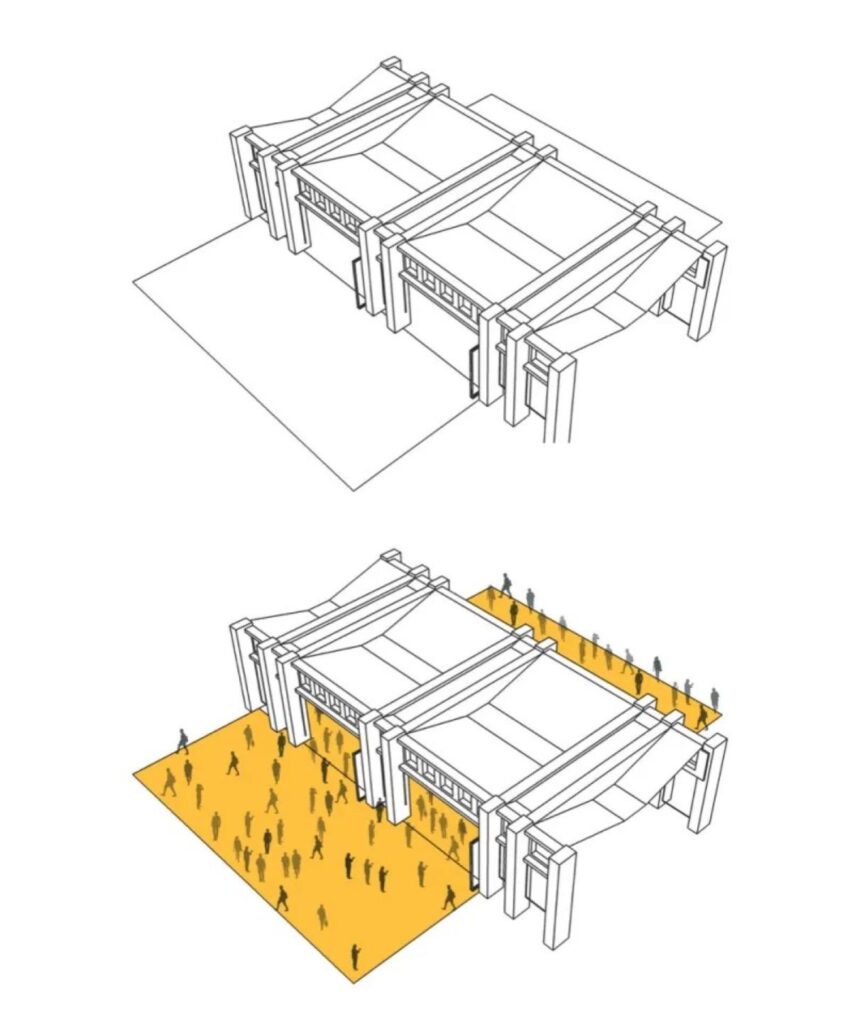
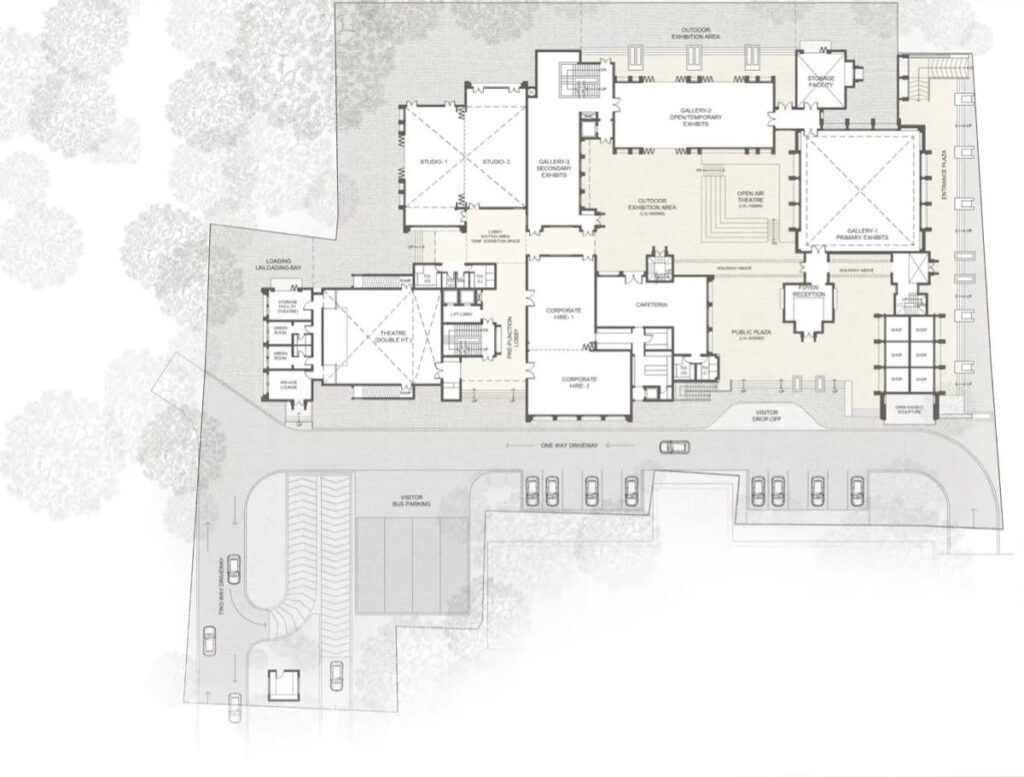
As the complex is situated adjacent to a major link road, the design takes advantage of being a public building to connect to the city through an open plaza on the main road, which provides for a large congregational space and encourages inflow of visitors. Also, to connect to the city, the building is designed with a porous nature. The overall built mass is planned as a cluster of separate blocks.
Single-storied building blocks are placed at the complex periphery to encourage barrier-free visual connection. Large public squares and courtyards work in combination with defined access points and form walkways to facilitate free and organic movement patterns within the complex.
Engaging the users:
Science Gallery Bangalore is envisaged as a comprehensive building that ensures visitors engage in activities at all levels through various planning strategies. Experience with the space and its elements is an important part of engaging young minds with scientific discoveries; thus, the building design progresses in a way that captures the attention of the visitors by creating a visually attractive environment that further generates intrigue and inquisition in the observer.
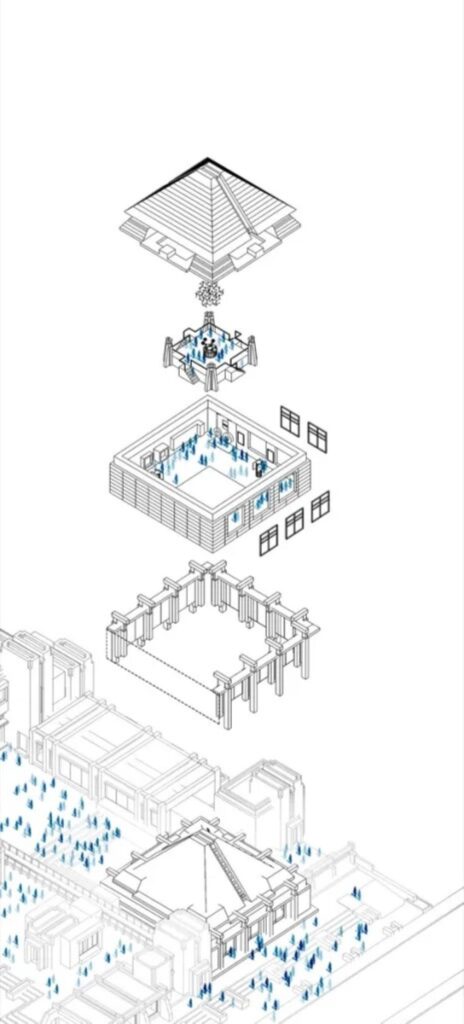
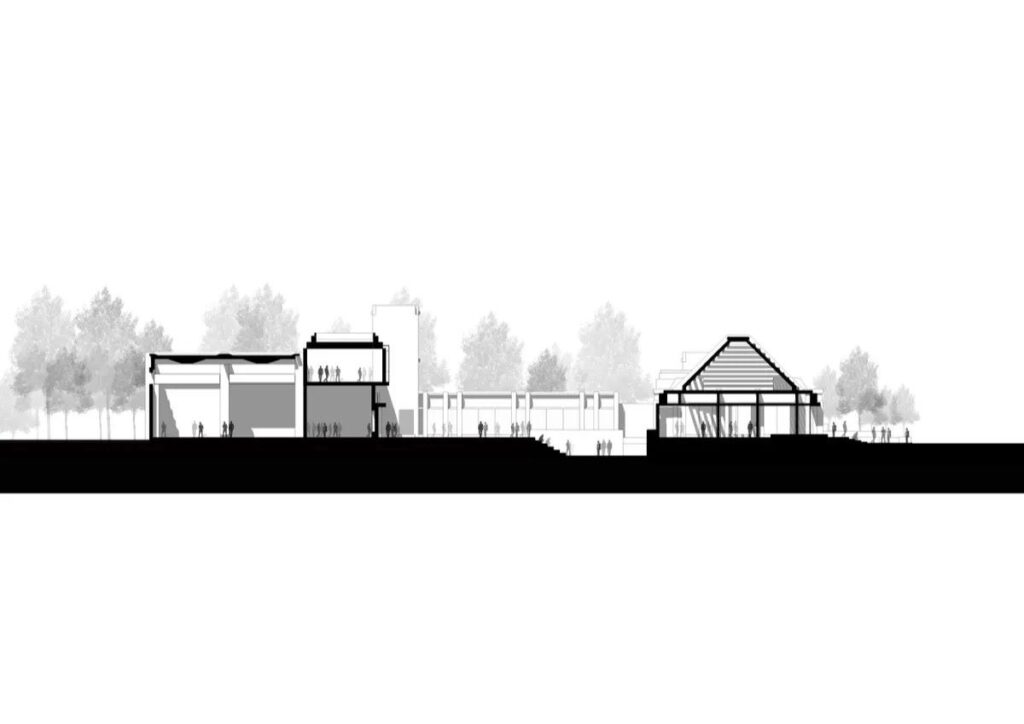
The low height of the building complex reinforces the visual connection between upper levels and the public spaces at ground level through large public terraces, a roof-top cafeteria, and skywalks. The skywalk is designed from the front plaza on the main link road to the cafeteria block to encourage in-flow of visitors and facilitate recreational services to passersby.
A courtyard is provided in the central region of the complex, which acts as the dynamic center at the ground level and connects various functions together. Exhibition galleries, corporate zones, cafeteria, retail shops form various edges of the central court and encourage the young minds to be interested in the different activities taking place in it.
Exploring diversity in form and function:
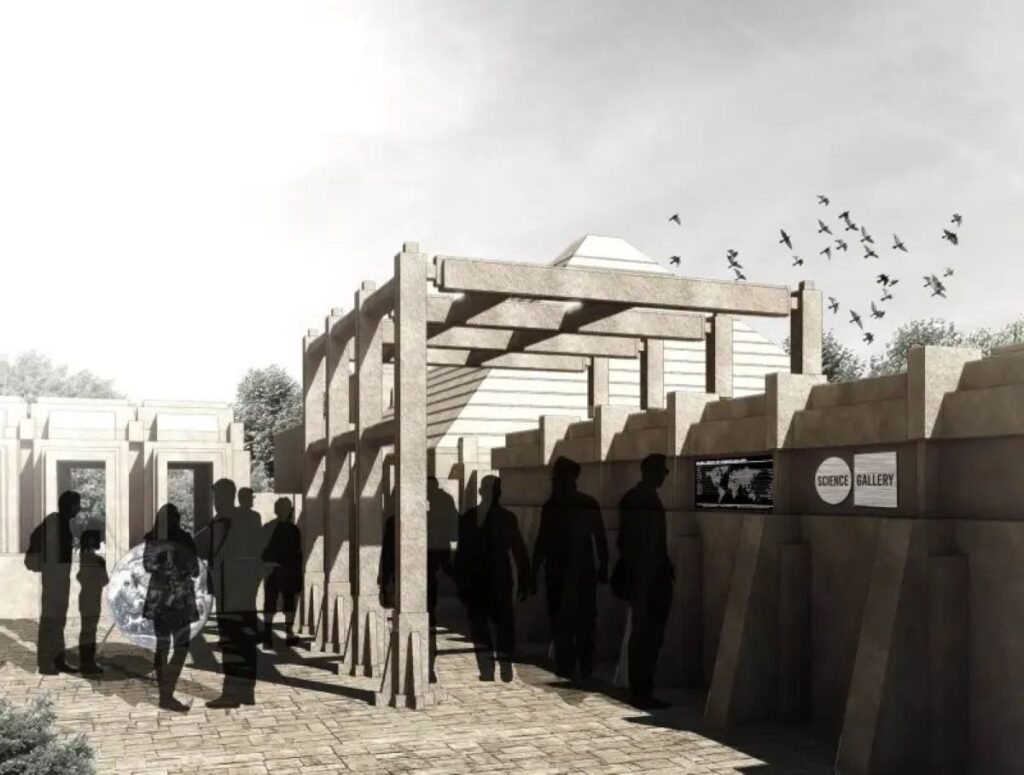
Diverse typologies for exhibits have been explored in the building complex. The unique identity of the galleries is defined by the incorporation of specific forms and functions, creating distinct experiences for visitors in every space. The monumental scale of the pyramid gallery creates an overarching experience for the visitors. The large floor plate enclosed by the gallery is flexible and can be subdivided into multiple parts. Temporary exhibition spaces work in conjunction with outdoor public squares to provide flexibility. This provides a spill-out zone to display large outdoor exhibits and provide an interactive and engaging exhibition space.
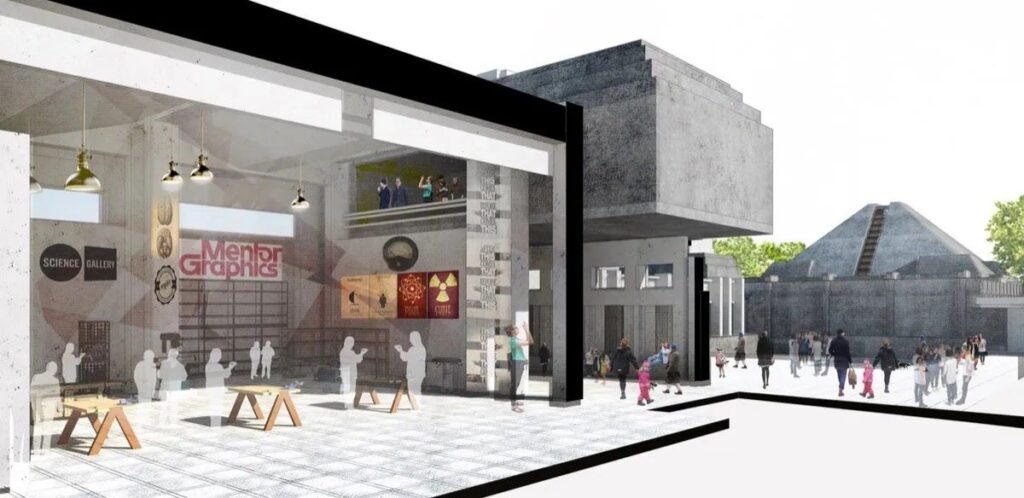
Live exhibition spaces are formed by the integration of studio/ workshop areas with visitor gallery space. This conjunction of zones provides an opportunity for real-time exhibitions where visitors can observe artists and researchers at work and create interest for the user. Outdoor public squares/ plazas and walkways comprise recessed alcoves and niches that are used for public exhibits and allow users to constantly engage with science and art technologies. Building complexes and their façade thus provide an interactive display canvas for exhibitions.
Conclusion:
The Science Gallery Bangalore is an architectural work that has very comprehensively fostered an empowering environment. It has been sculpted specifically in order to experience a captivating dynamism by providing a holistic meeting place rather than solely being an exhibition space. The porosity and openness of the complex wantonly invite the city and its people to be a part of it and create a unique identity in Bangalore.
Gallery:

Gallery (Drawing):
Project Details:
Name: Science Gallery
Location: Bangalore
Built-Up Area: 2760 sqm
Typology: Public Building
Year: Conceptual proposal
Designed by: Chaukor Studio
Collaboration: Incubis consultants pvt. Ltd