
Memory in Motion invites the community to reflect on the idea of environment and landscape, natural and anthropological, interior and exterior, real and imaginative, and on the role of the community with respect to the urban and territorial context of the city of Matera.
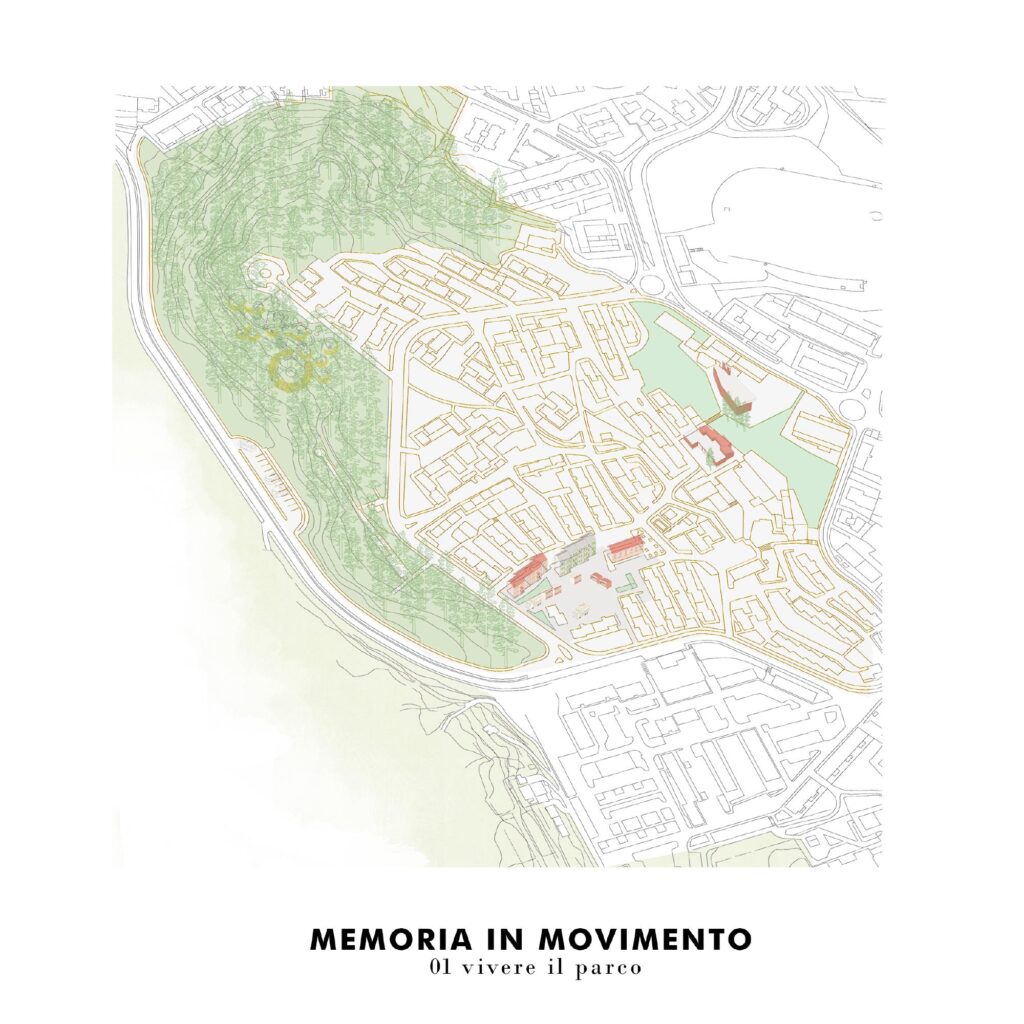
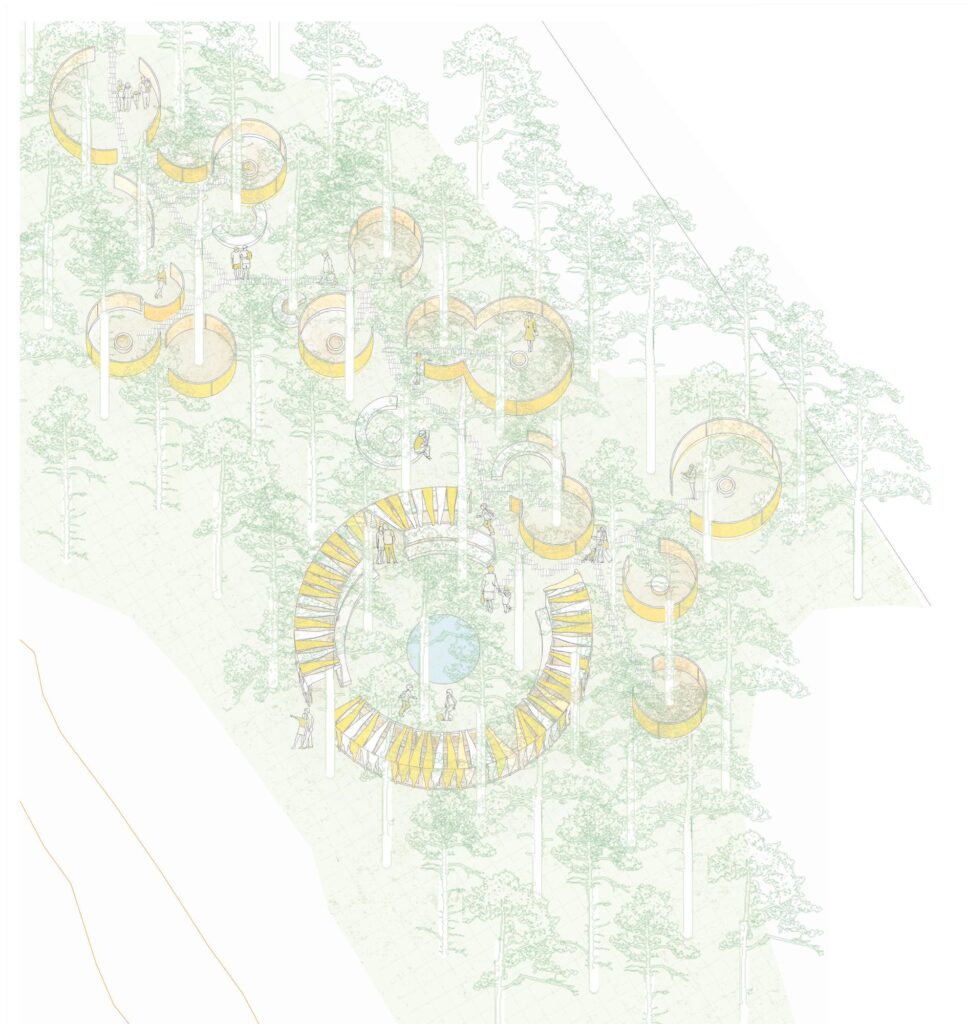
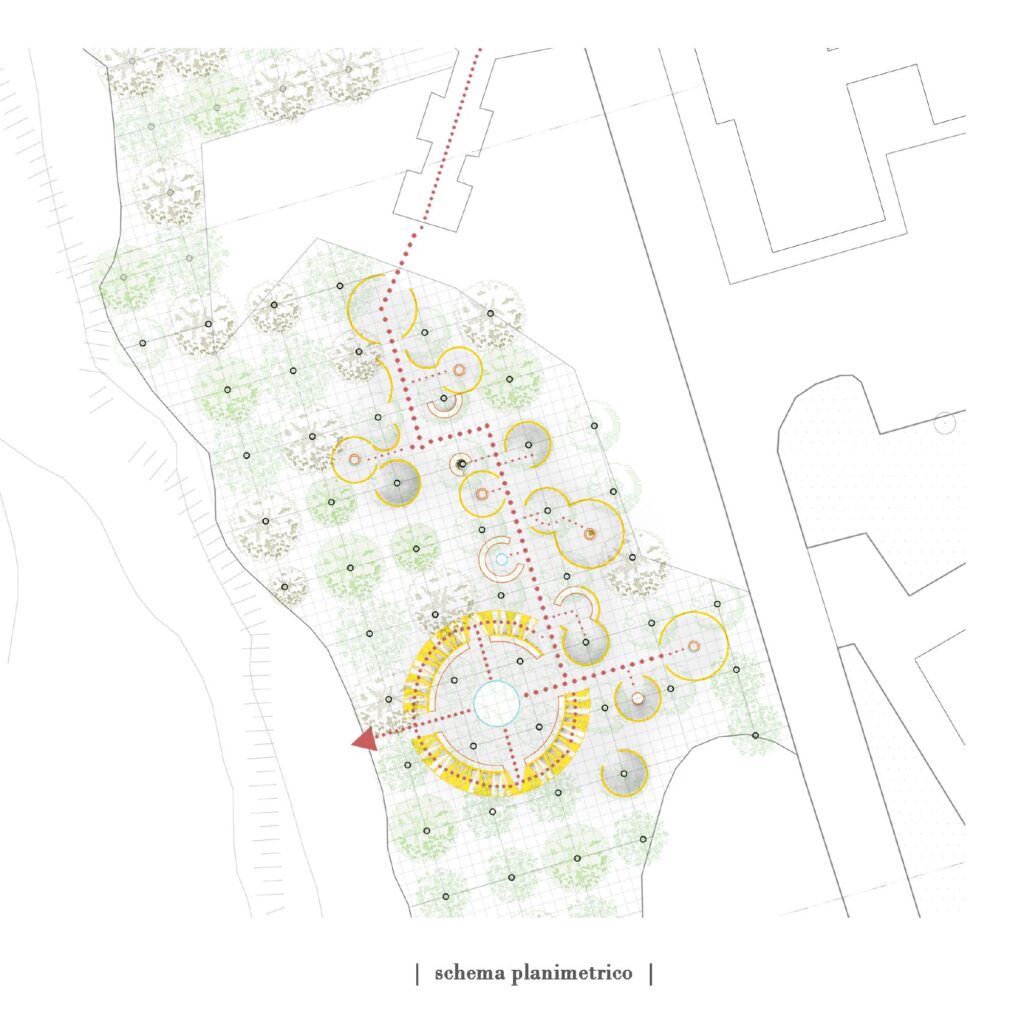
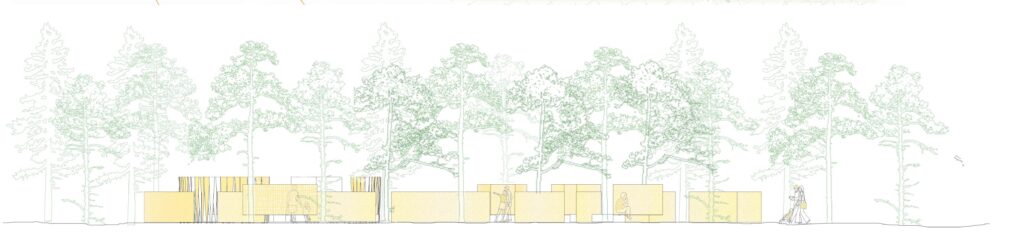
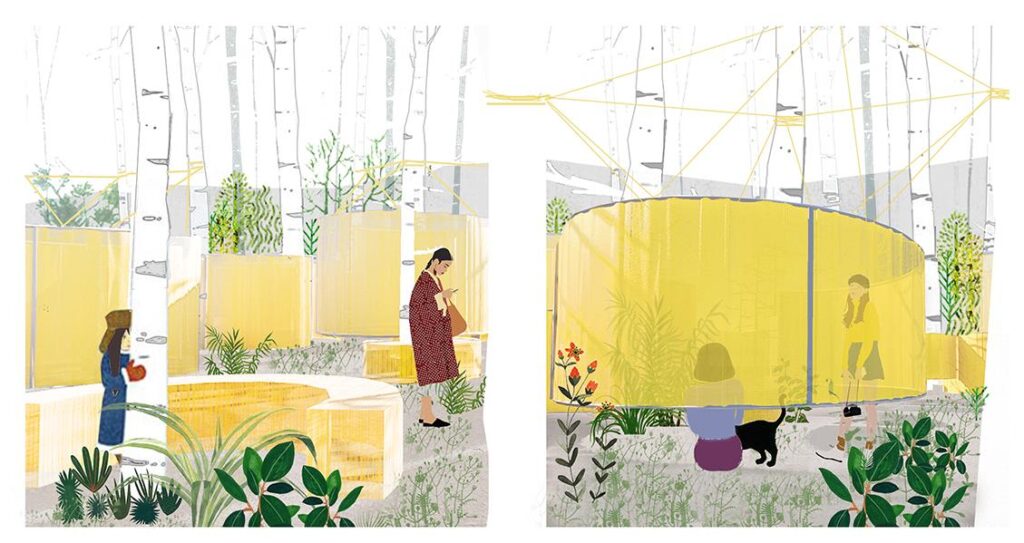
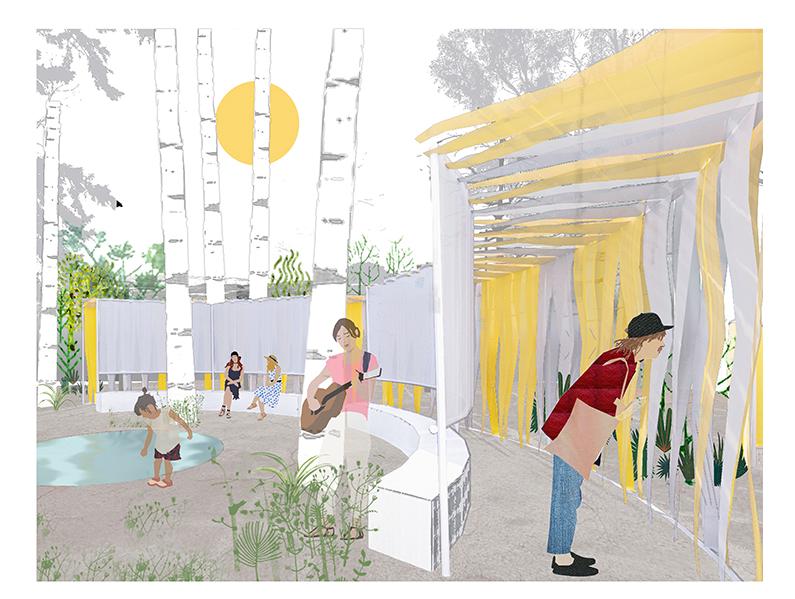
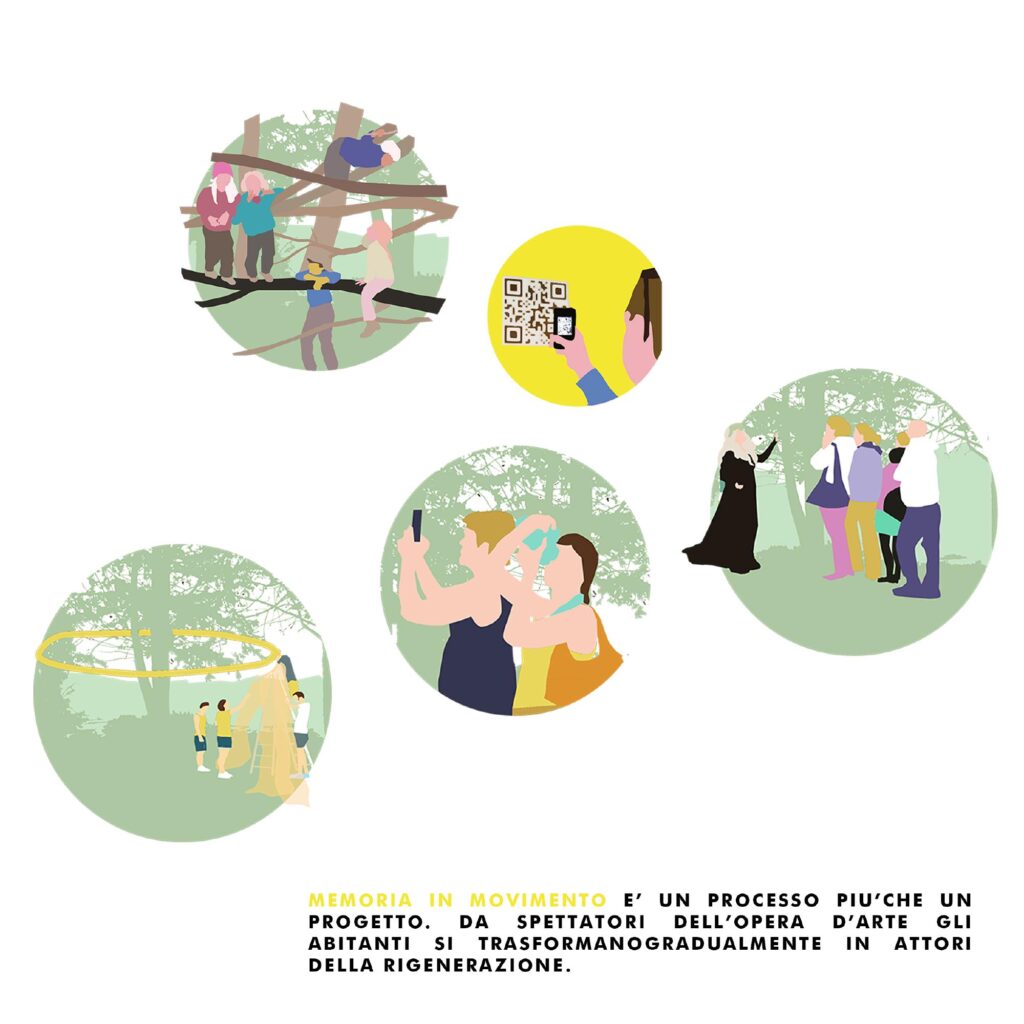
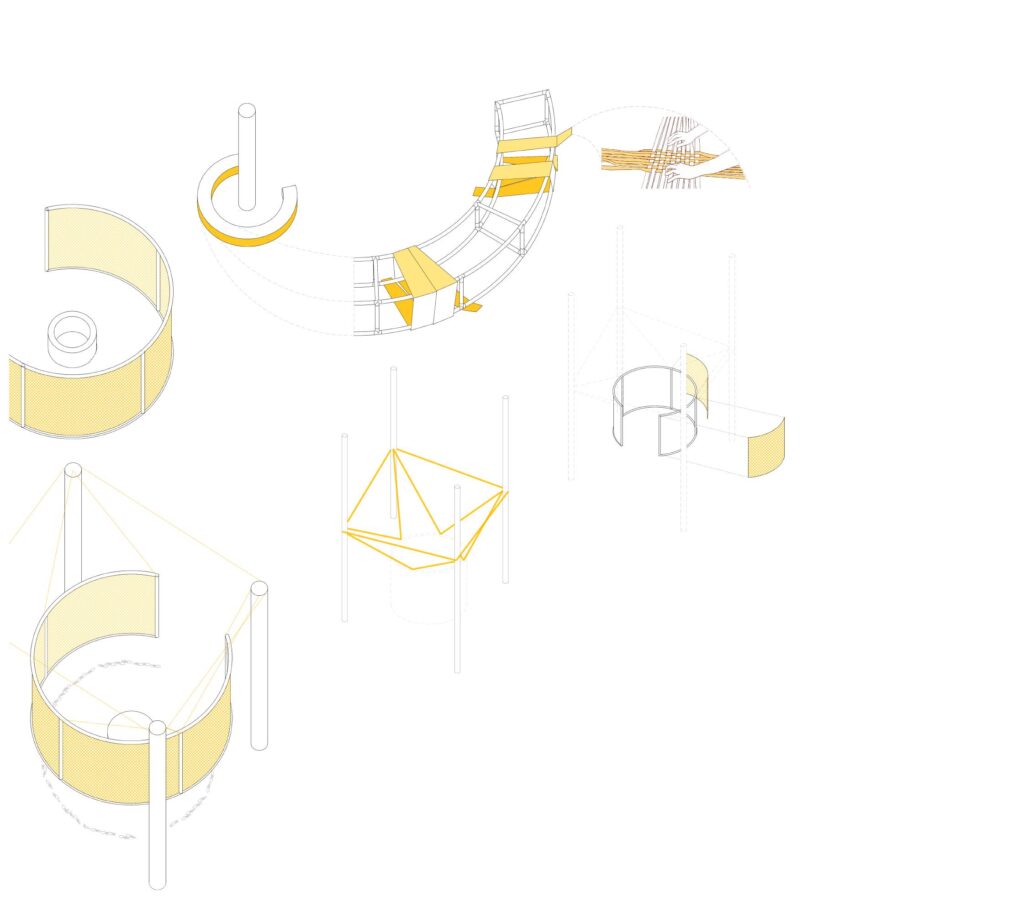
The proposed project involves the creation, in the area of the Serra Venerdì park, of a system of grafts that articulate the space and make it liveable for the inhabitants of the neighbourhood and the city of Matera and usable for the occasional visitor. Memory in Motion builds a labyrinthine path that winds through the trees of the Serra Venerdì park and is designed to be a privileged place for enjoying the landscape, a meeting point for the community that lives in the neighbourhood, a work that can be visited by tourists, and a place to carry out various activities such as events, performances and workshops.
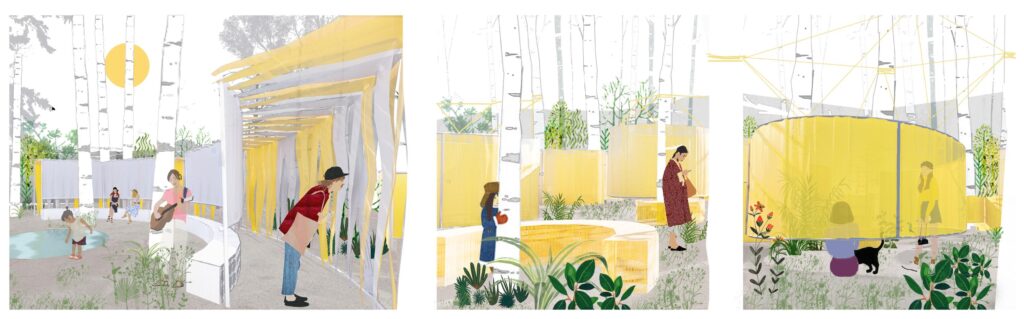
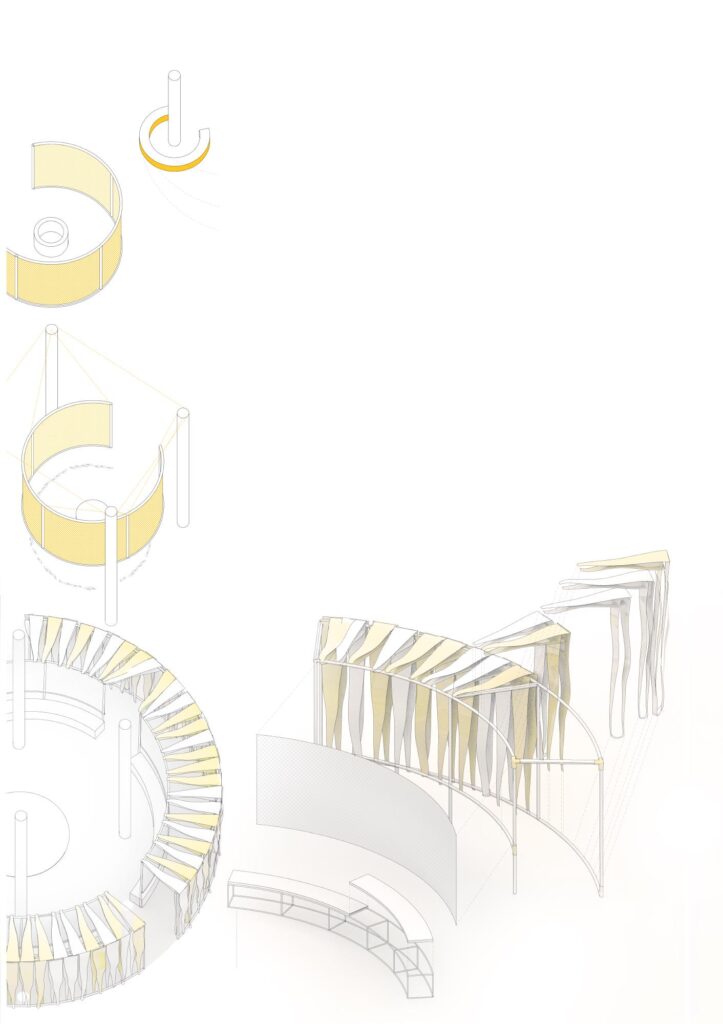
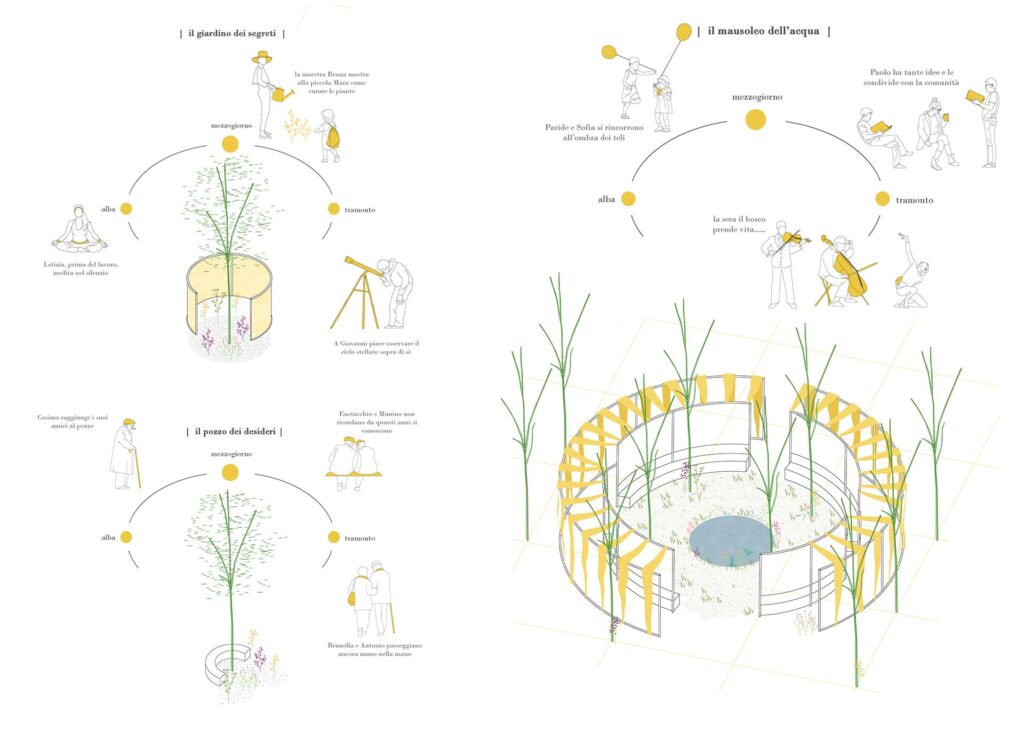
The project is articulated through a succession of 3 different types of circular spaces: the secret garden; the wishing well and the mausoleum of water. Each of these types has specific dimensions and functionalities.
The project proposal originates from the study of the settlement systems of the city of Matera and, more generally, of the entire Murgia territory. Known as the City of Stones, Matera owes its world fame to its historic center carved into the tuff, the ancient Sassi district, one of the oldest inhabited centers in the world. The Sassi district is an emblematic historical testimony of the integration between human settlement and natural landscape.
The spatial complexity of this place is evident by walking through its alleys and observing: the hierarchy of spaces and connections, the relationship between built solids and excavated voids, the semi-public spatiality of the urban chambers, the ancient cisterns dug deep into the limestone, the use of local materials. Throughout history, the city of Matera has shown a constant persistence of these main characteristics.
This balance experienced a deep fracture in the fifties of the twentieth century when the extreme conditions of overcrowding, accentuated by the war past, led to a process of abandonment of the Sassi, which were defined by Togliatti as a “national shame” for the precarious hygienic-sanitary conditions in which they found themselves. In this historical phase, the so-called “displacement” of the ancient districts began.
Matera became the case-study in which the ambition of political and cultural, national and international programs converged for the construction of the new city for the transfer of peasants. The Modern Movement planned new districts (Serra Venerdì, Lanera, Spine Bianche, Villalongo and Piccianello) and rural villages (La Martella, Venusio, Picciano and Agna). Modern expansions experimented with possible anthropological, social, cultural and architectural solutions for the resolution of the state of underdevelopment of Southern Italy.
But if the Sassi are currently reduced simply to the form of a “widespread museum“, where are the Materani? Where is the community? By transferring the population of the Sassi to the modern neighbourhoods, including Serra Venerdì itself, the soul of the city has also moved, which no longer resides between the cordons and the neighbourhoods. The people of Matera have adapted to an “online” lifestyle, far from the domestic dimension of the neighbourhoods, the so-called “urban rooms” of the Sassi.
What Restso of the Sassi and in the Sassi? Stones without a soul, eternal places in time, but devoid of social memory. In fact, if on the one hand the oldest heart of the city is concentrated among cordonate, neighbourhoods and rock churches, on the other, beyond the Sassi, there are the hotbeds of memory, the places of stories. They are portions of an inhabited city that tells about itself, to be discovered and enhanced through actions, initiatives and artistic-cultural activities. The Sassi are also Spine Bianche, they are Serra Venerdì, they are Lanera, they are Piccianello!
Therefore, the Memory in Motion project aims to create, within the modern city, spaces inspired by neighbourhood unity, to re-propose the settlement archetype of the ancient city, precisely in the places where the historical spirit of the neighbourhood peasant communities lives today. We go back to the origin of the neighbourhood by studying its first experiences, which become guidelines for the conception of the project proposal.
In particular, it can be observed that, in the protohistoric age, the housing unit was made up of circular enclosures that served as dwellings, stables or burials. The main element of these first settlements was the presence of water, collected in circular wells in which it was concentrated due to condensation and infiltration phenomena. Traces of the ground attacks of huts, always circular in shape, have also been found, where the theme of water, collected in tanks, returns preponderant.
Starting from the analysis of these elements belonging to the history of the place, a project proposal was developed, a combination of the memory of the places and inhabitants of yesterday and today.
Gallery:
Project Details:
- Project Name: Memory in motion
- Location: Matera, Italy
- Year: 2019
- Typology: Public Space, Installation
- Designer: Sole Kidney
- Design Team: Loredana Ficarelli, Raffaele Fiorella, Emanuele Spataro, Giorgia Floro, Ivan Cosimo Iosca , Letizia Musaio Somma, Valentina Spataro, Marco Veneziani, Massimo Veneziani
- Curated by: Unbuilt Ideas