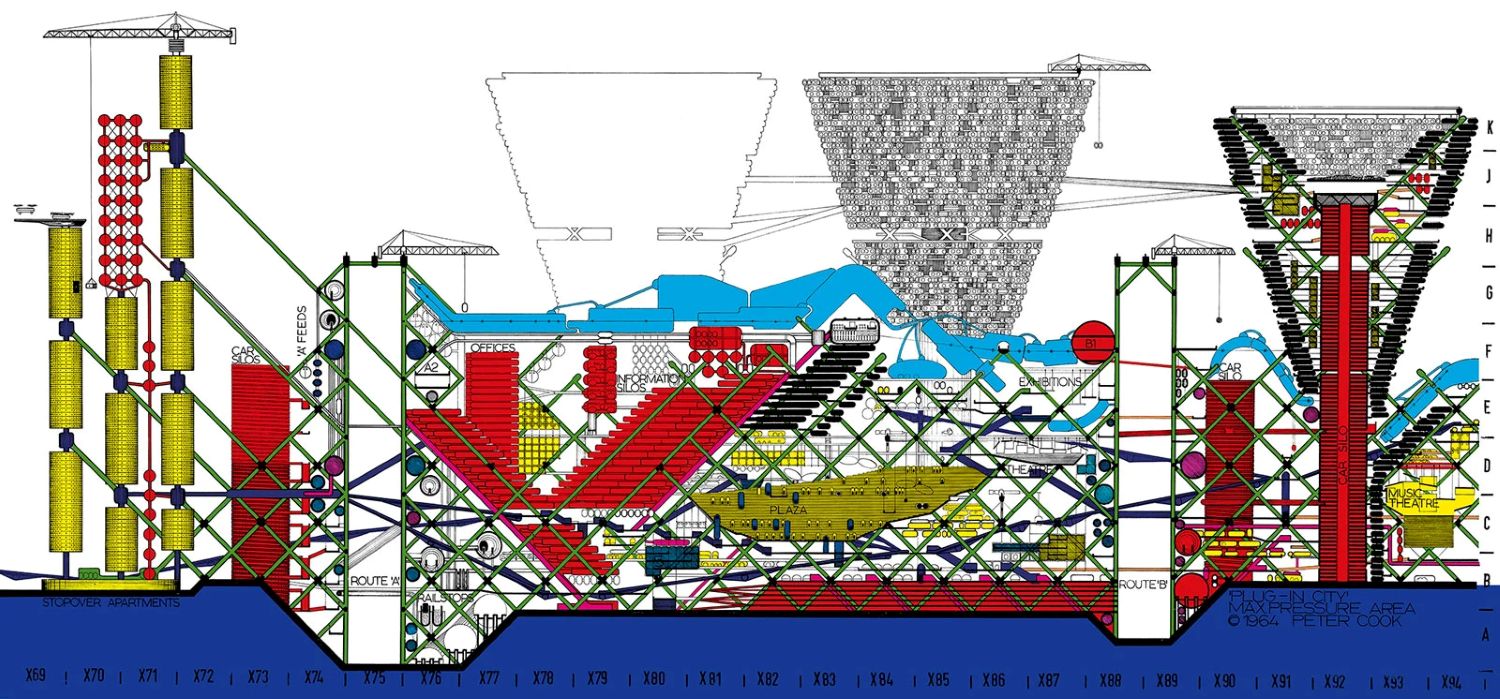
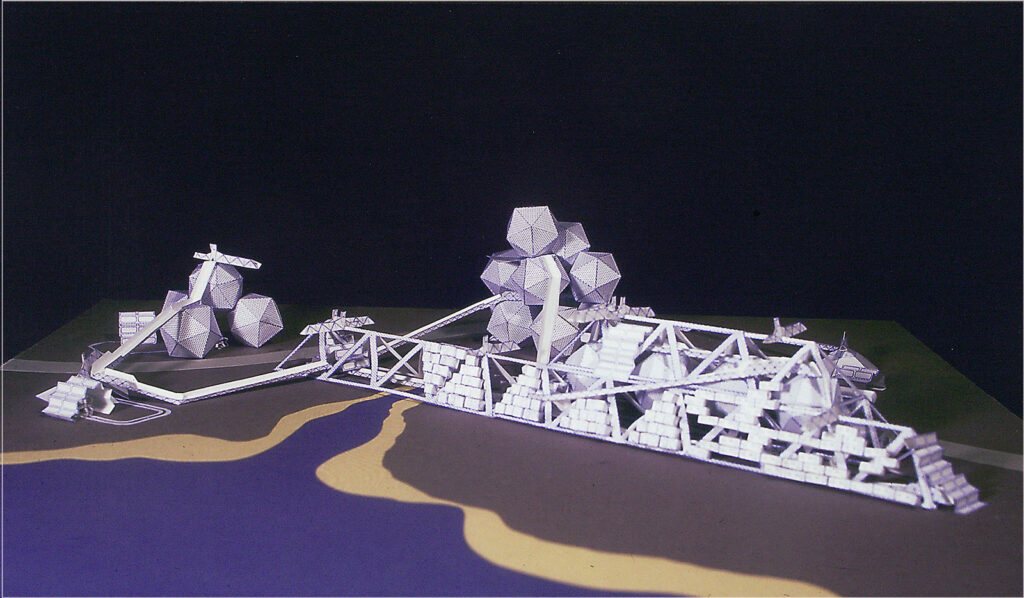
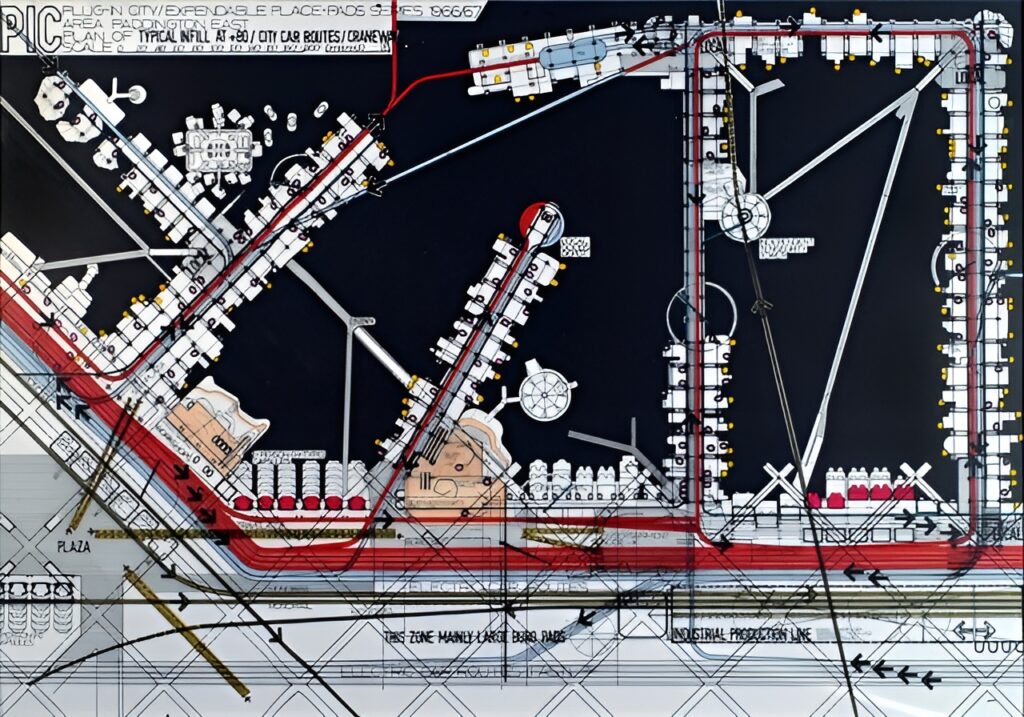
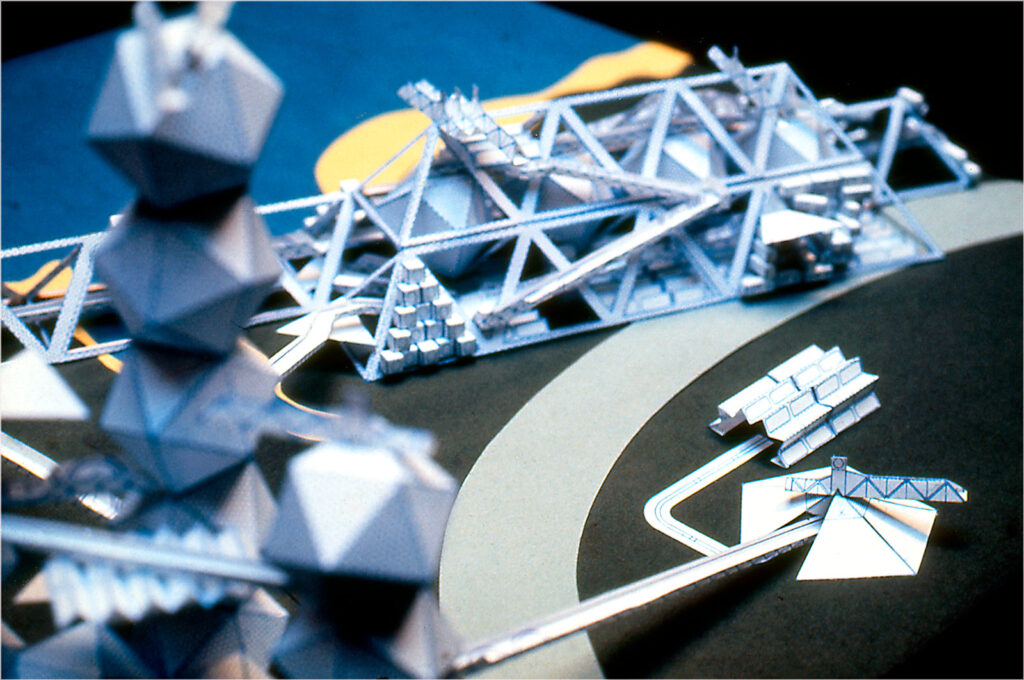
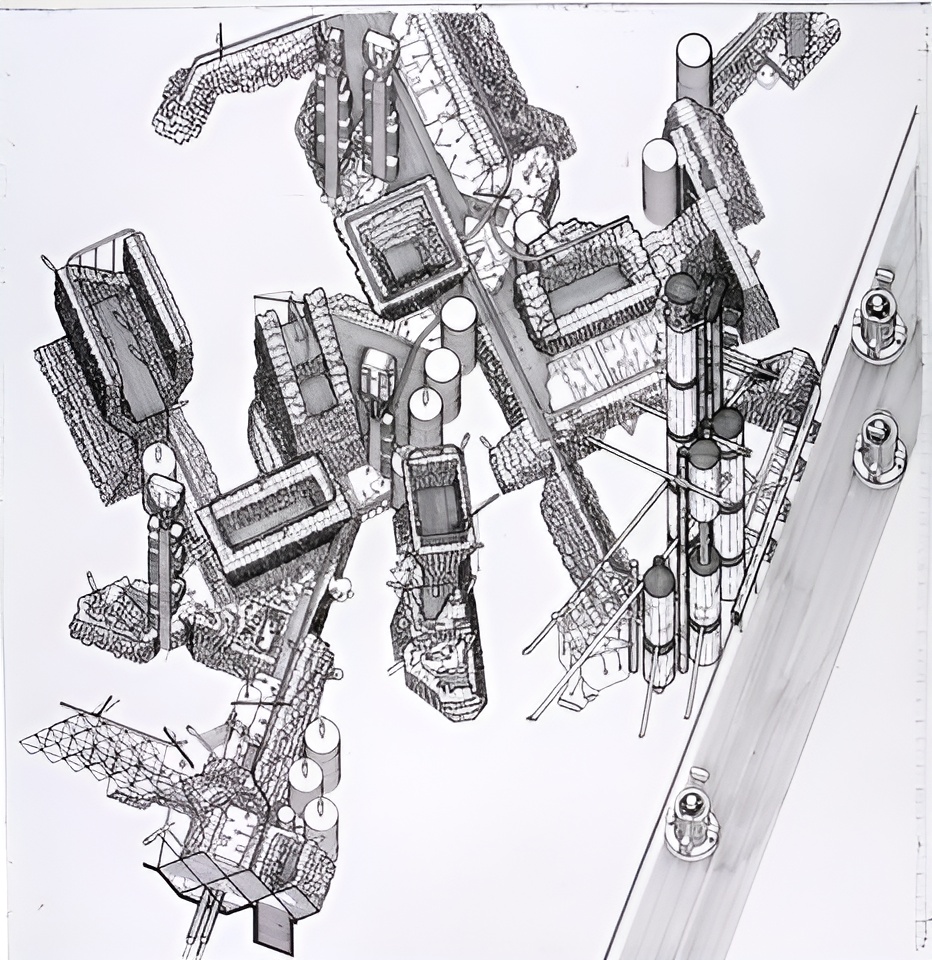
In the mid-1960s, Archigram began imagining cities that could change as freely as the people living in them. Between 1963 and 1966, the group – Dennis Crompton, Michael Webb, David Greene, Warren Chalk, and Ron Herron with Peter Cook developed Plug-In City, a futuristic metropolis where prefabricated homes could be plugged into enormous structural frames and replaced when needed. Drawing from their everyday work with prefabricated housing, the architects wanted to prove that industrialised construction could be flexible, playful, and far from boring.
Drawing from their everyday work with prefabricated housing, the architects wanted to prove that industrialised construction could be flexible, playful, and far from boring.
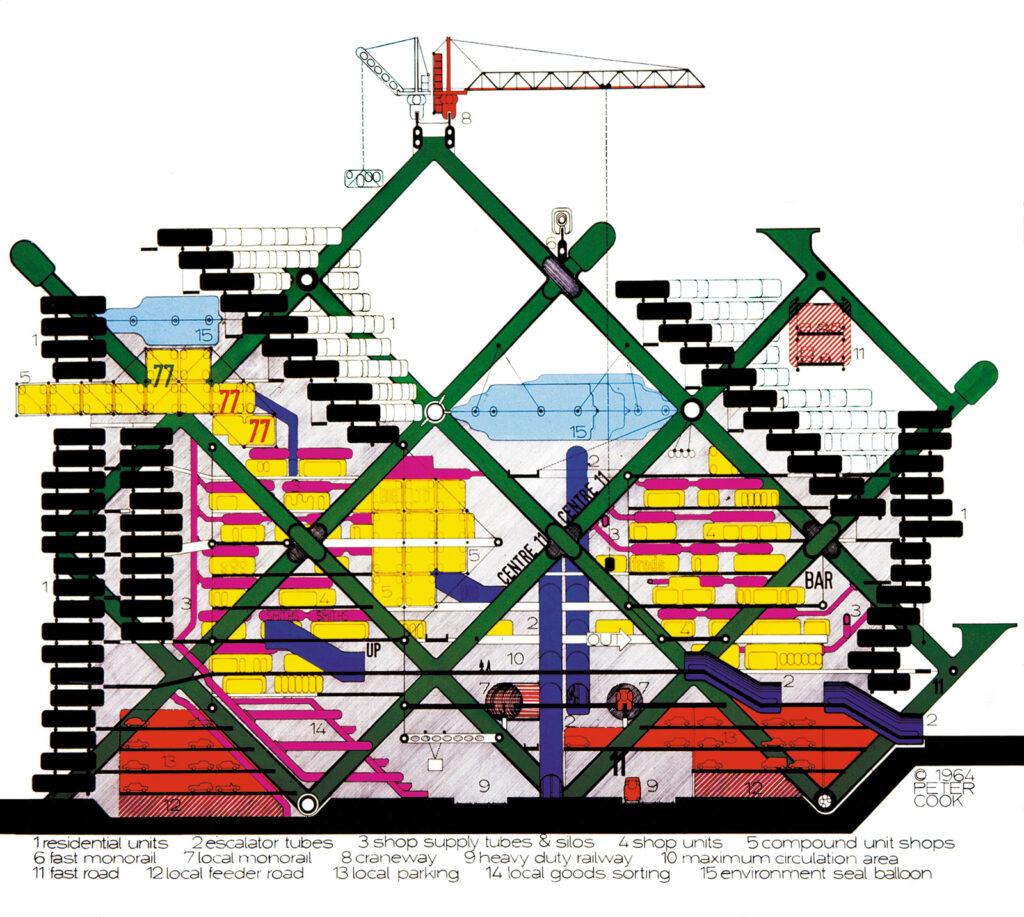
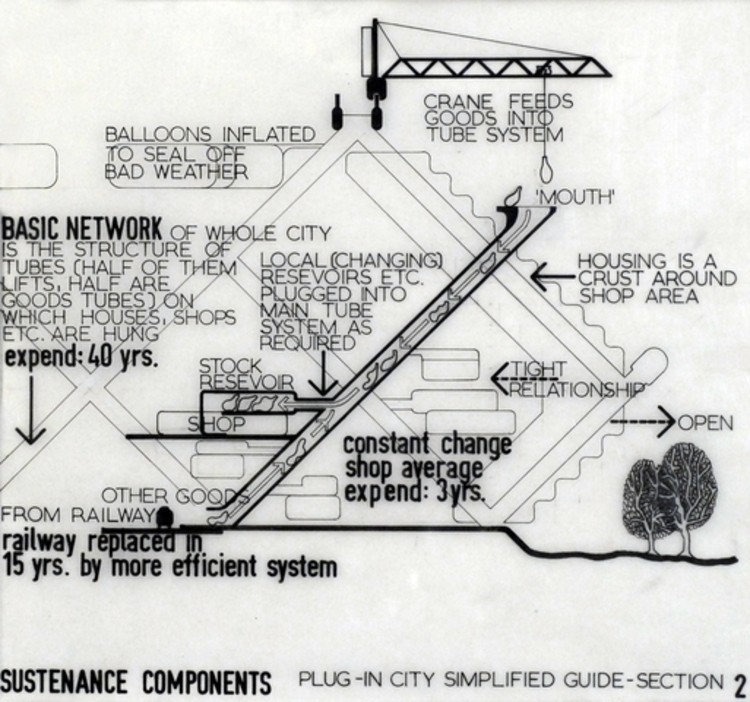
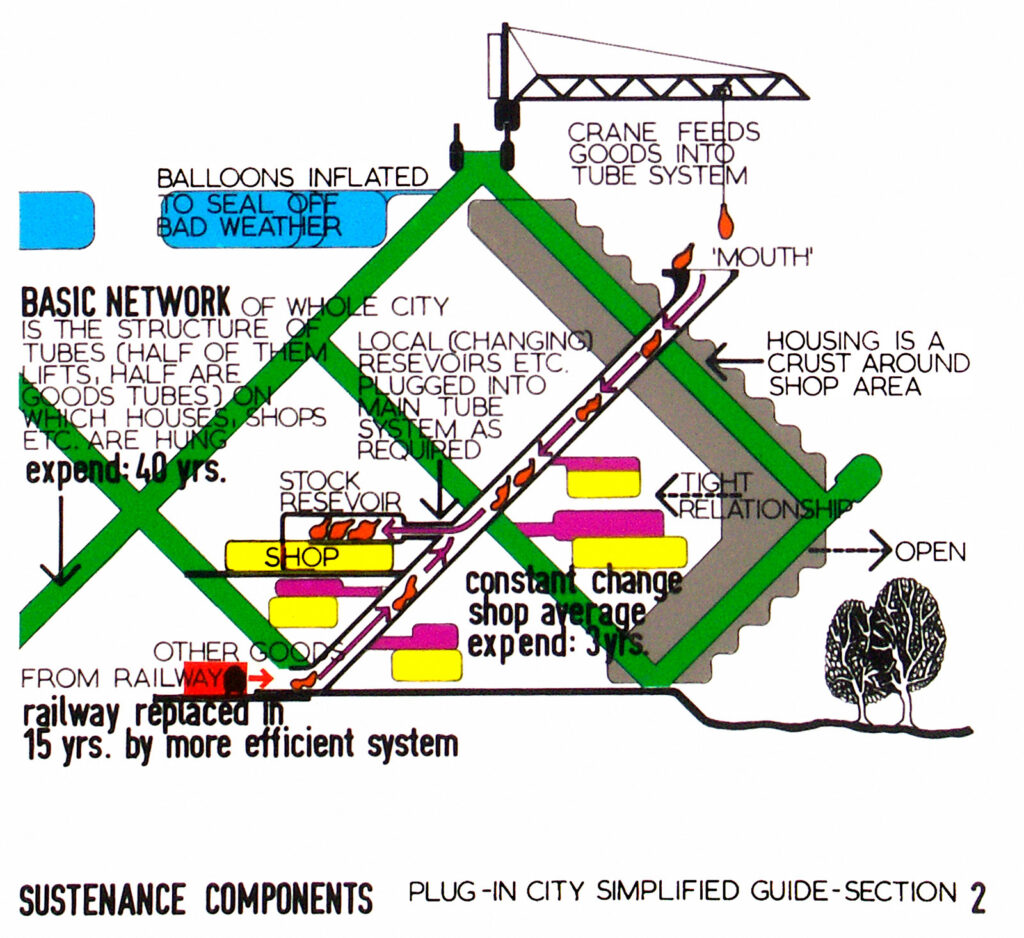
Imagine a giant skeleton holding the whole city together. That was the idea behind the megastructure — a framework carrying the lifts, walkways, pipes, and other essentials, while homes could be attached around it. These compact units could be swapped, upgraded, or resized as people’s lives changed. Rather than leaving a house behind when it no longer fit, Cook imagined a home that could grow with you.
Rather than leaving a house behind when it no longer fit, Cook imagined a home that could grow with you.
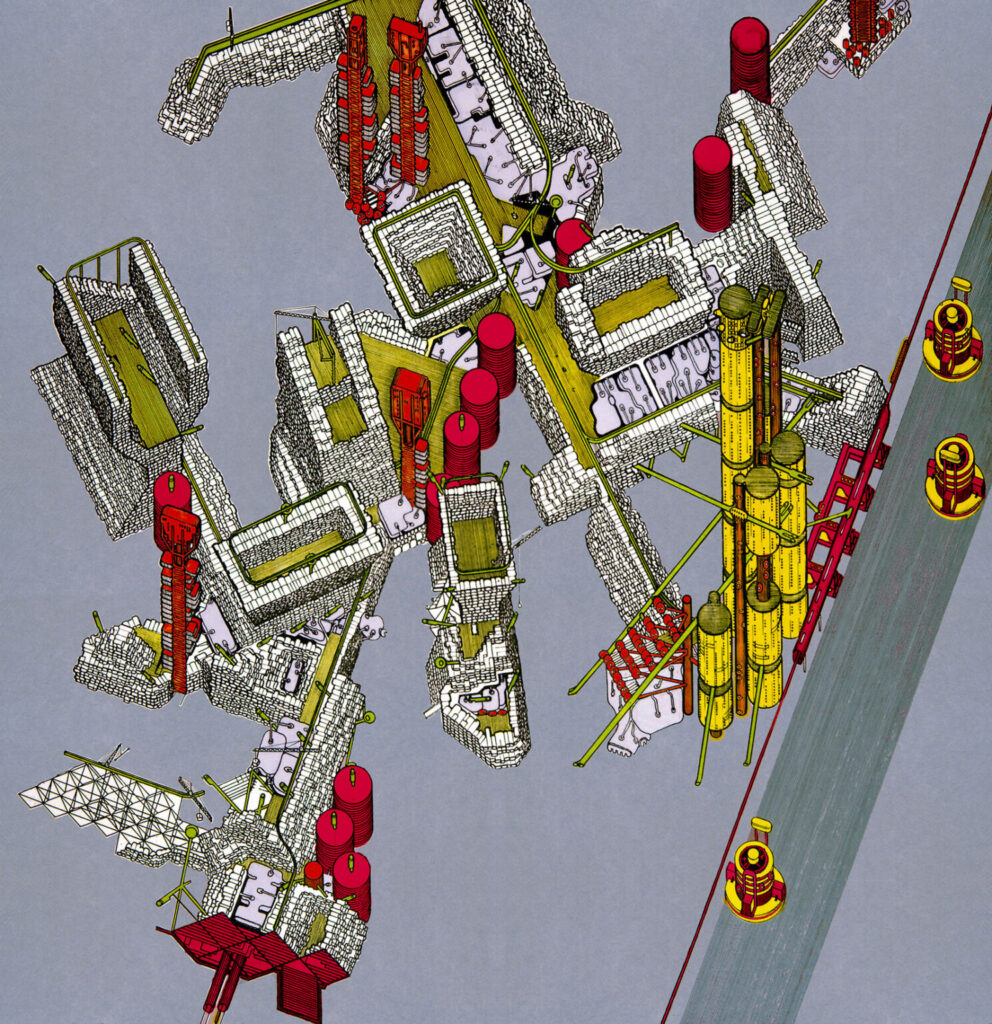
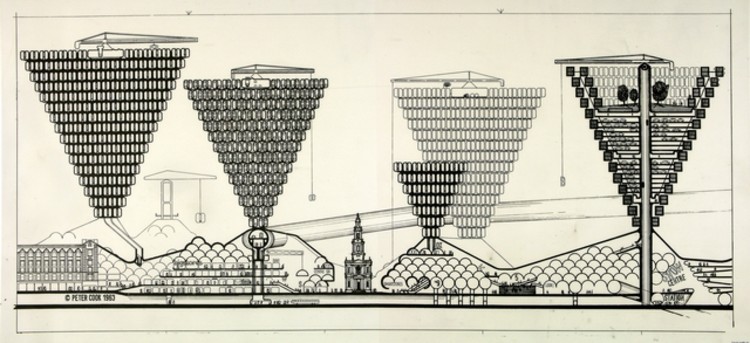
The idea also gave residents more control over their homes. Construction crews would build the basic units, but people could decide how their own spaces looked and worked. Archigram imagined the same flexibility at a larger scale, with public spaces spread across the megastructure’s different levels, turning the city into a layered, vertical landscape rather than the familiar sprawl of streets and low-rise buildings.
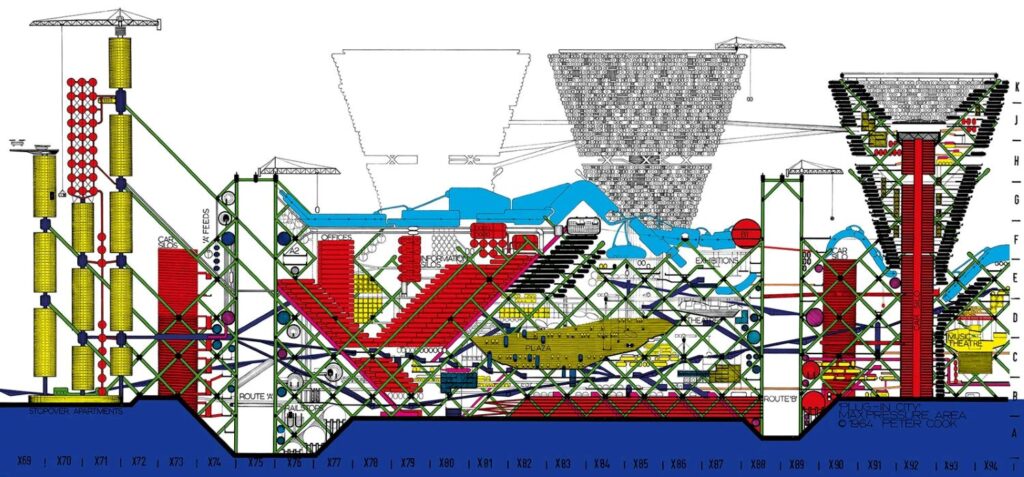
Archigram had only been around since 1961, but for the next two decades they kept producing this kind of restless, technologically obsessed architecture, borrowing as much from comic books and science fiction as from engineering. Cook always felt the project’s openness to constant change said something true about the era it came from.
Plug-In City was never built — and never really meant to be finished — but it’s stuck around anyway, still one of the most talked-about “what if” moments in architectural history.
Gallery:
Project details:
- Name: Plug-In city
- Location: Speculative
- Typology: Residential
- Designer: Archigram