Party School, at Kotla Road, New Delhi, by Nu Design Daftar

Party School, at Kotla Road, New Delhi, by Nu Design Daftar

Author

nu design daftar

Kanishk Prasad Principal Architect In practice since getting his B.Arch in 2001, Kanishk has worked first with firms like Romi Khosla Design Studios, Rizvi College, Mumbai and Neeraj Manchanda Architects, before setting up the Nu Design Daftar. Since then the office has successfully completed numerous architectural, interior design and exhibition design works. He also has engaged with teaching and learning modules for various colleges of design and architecture around Delhi-NCR. Vertika Chaturvedi Principal Architect​ Since coming into professional practice, Vertika has worked on many projects with a focus to landscape and urban design development. Having worked with consultants like Oasis Designs Inc., Fiona Environs and Mark Warner Architects, she has worked on developing landscape design features, signages and way finding for large scale residential township developments as well as farmhouse constructions. She also has conducted design research programs including natural heritage mapping in Gurgaon and design norms for senior assisted living facilities. She has also been involved with teaching work at various colleges of design and architecture.

This essay is a part of Unbuilt 2.0 – BUY THE BOOK

Party School, at Kotla Road, New Delhi, by Nu Design Daftar

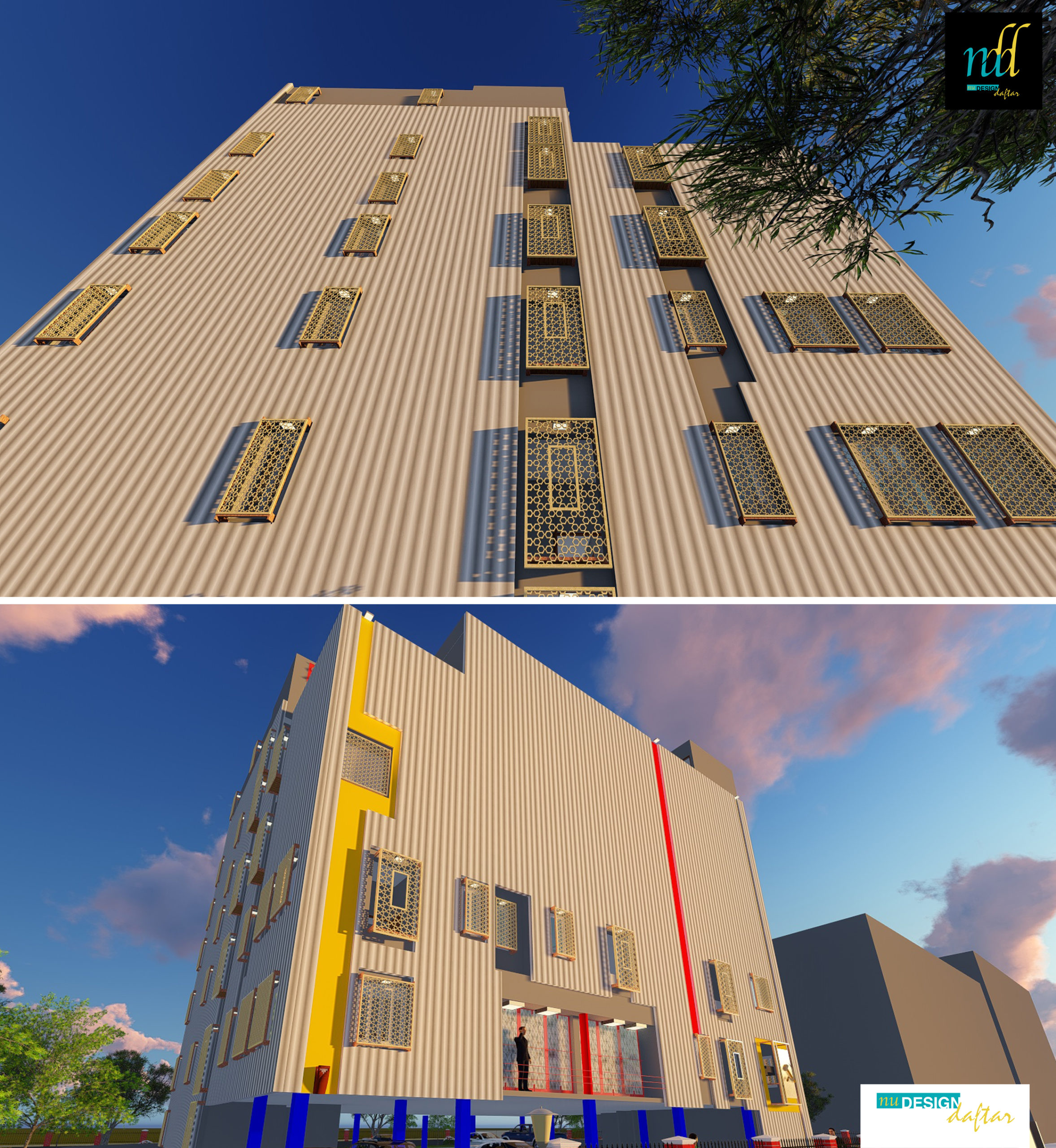
The building of the school for the Communist Party was to be a residential school to host 120 young members from across different regions of India to visit here in Delhi and interact with senior leaders and mentors for short term course interactions.
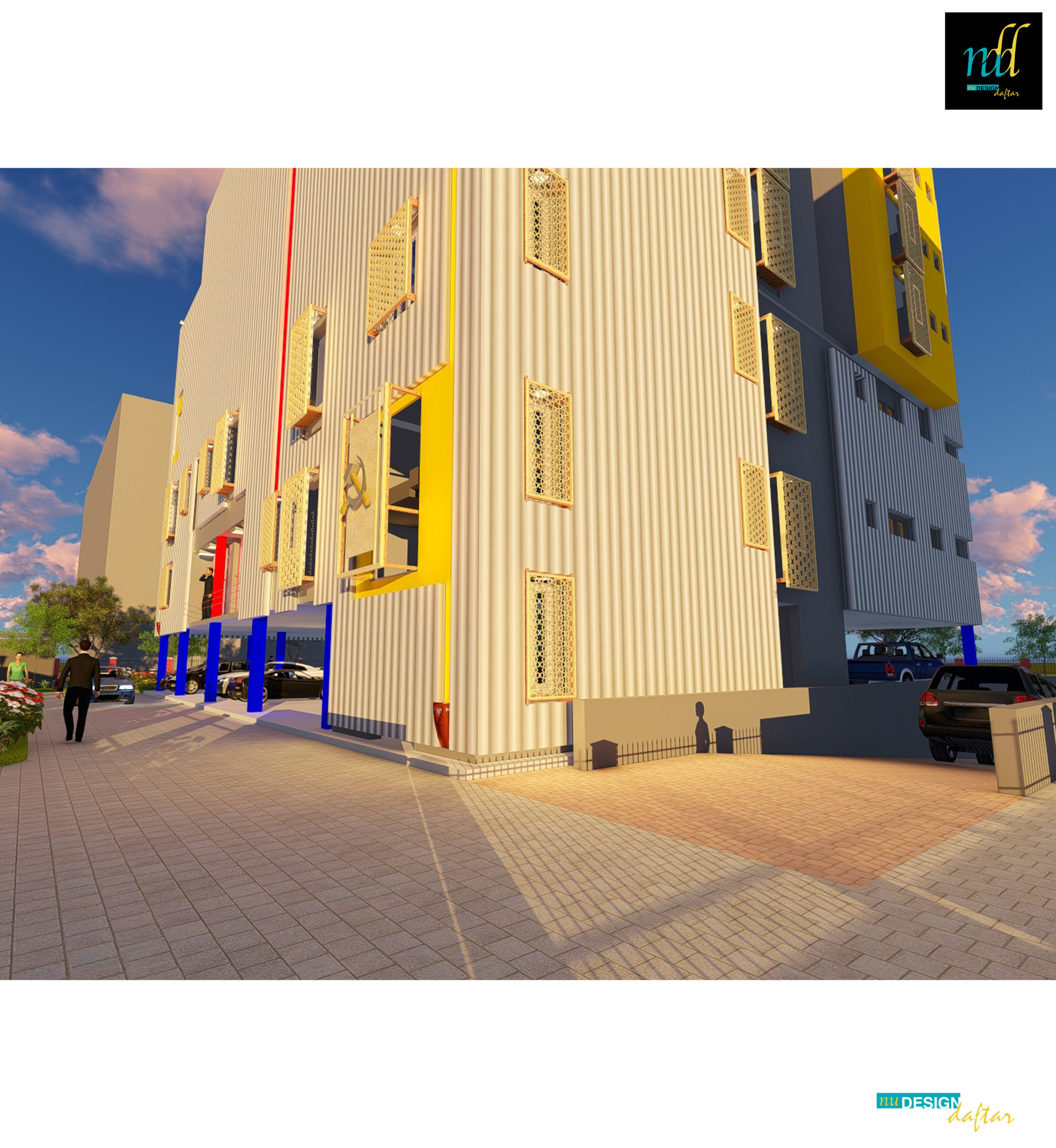
The primary function for the students is a Lecture Hall located on the first floor of the building. The ground and first floors comprise the functions devoted to the student activities, including a mess hall, kitchen, two levels of dormitories (to house all the visiting students) with shared toilet and shower facilities. The upper three floors housed a 350-plus capacity Auditorium to host the larger gatherings of Party members and affiliated organizations. Additionally, the building also had 5 1-bedroom apartments suites to be occupied by a caretaker family or by visiting guests.

The design of the building has been inspired by early Constructivist design philosophy that focused its attention onto materials at hand and primary geometry and color as its palette. Forced to use all materials however fragile, the artists of this period experimented to create a new language of art, sculpture and design. The building tries to create an eclectic expression assembled by materials close at hand and easily identifiable by the greater mass of people who must form the core strength of the Communist movement. A people’s movement such as this must be realized as an approachable and identifiable construct.

Layout Plans

Like what we publish?

[login_dashboard_button]

SUBSCRIBE

A place to explore the ‘what ifs’ of design.

Subscribe & Join a Community of Thousands of Readers

Rupali Gupte

Rupali Gupte is an architect and urbanist based in Mumbai, Professor at the School of Environment and Architecture (SEA) and a partner at BARDStudio. Her work often crosses disciplinary boundaries and takes different forms – writings, drawings, mixed-media works, story telling, teaching, curation, walks and spatial interventions.

Her works include extensive research on contemporary Indian urbanism with a focus on architecture and built environment; tactical practices; housing; and urban form. In 2013, she co-founded the School of Environment and Architecture (sea.edu.in). SEA is envisaged as an experimental academic space for research and education in architecture and urbanism. She has a wide range of publications, has delivered lectures and been on juries across the world. Her works in collaboration with her partner Prasad Shetty, have been shown in several exhibitions including the 56th Venice Biennale, X Sao Paolo Architecture Biennale, Seoul Biennale of Art and Architecture, at Manifesta 7 in Bolzano, at the Museum of Contemporary Art in Barcelona and at galleries such as Project 88, Devi Art Foundation and the Mumbai Art Room. She has recently curated an exhibition involving artists and architects titled ‘When is Space? Conversations in Contemporary Architecture’ at the Jawahar Kala Kendra.

Rupali Gupte